


(Listen to the radio version here.)
At this very moment, migrants are flooding through the natural world, a world that has no political borders marking off cities, counties, provinces, states, or countries, no hurricane forecast maps to be scribbled on with a marker, no large bodies of water with names that a scurvy politician1 can arbitrarily change.
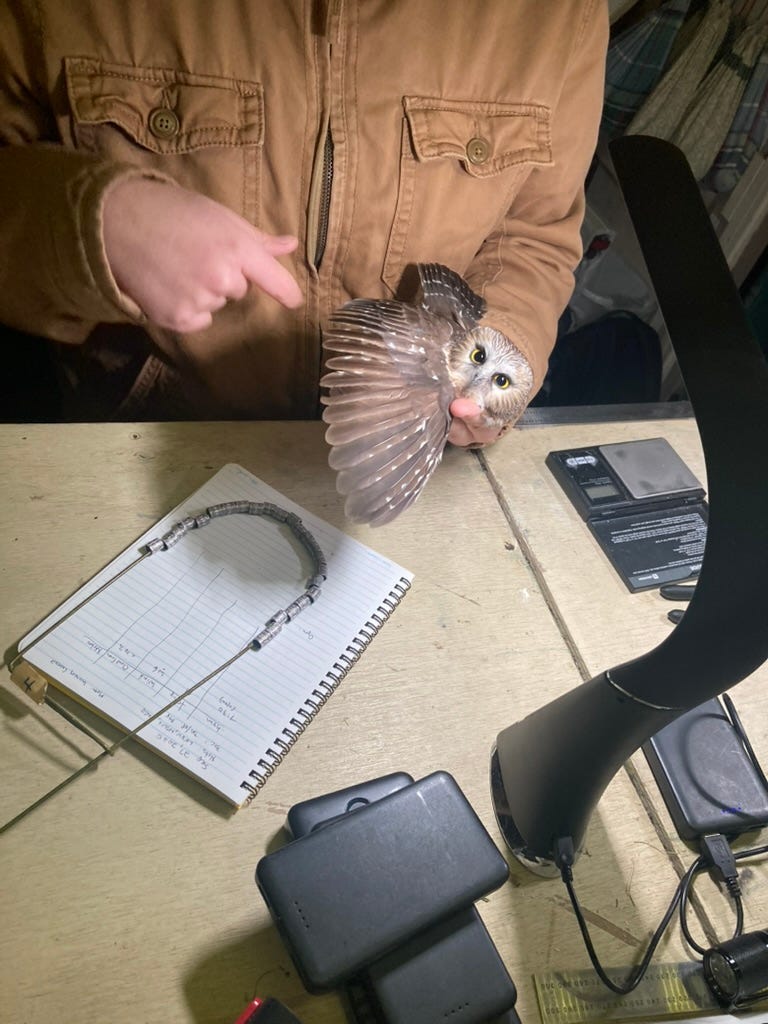
Yet oddly enough, there are checkpoints here and there, including one not far from my own backyard. Thousands of the birds flooding through Duluth’s Hawk Ridge this autumn are being detained by licensed federal operatives called bird banders. Not all the detainees are migrants, either—some who have spent every day of their lives right here in Duluth are also at risk of capture.
Entrapment is not only permitted but encouraged, but these agents are absolutely forbidden to hold their captives for unreasonable lengths of time or to use excessive, much less lethal, force even if a detainee fiercely resists capture, even on the occasions when the detainee causes bodily harm.

Interrogation is pointless—not one of these detainees speaks English, Spanish, French, or any other language federal agents might be familiar with. They are often vocal, but their languages are beyond the capacity of even the most sophisticated linguists or the finest AI apps to decipher.
Many of the migrants passing through Duluth right now are Canadian-born, and in spring, many of the ones nabbed at checkpoints all over the country arrived from Mexico, Haiti, El Salvador, and other nations south of the border. They never carry a green card or any documentation proving that they’re here legally, but it’s against federal policy to deport them.
When captured, identifying data such as height and weight—the kind of features listed on driver’s licenses and passports—is recorded.

When the sex is known, that’s recorded too, but some birds prefer to keep that information private. Except for a few research projects that confirm sex by plucking a feather for DNA analysis (such as some studies at the Cornell Lab of Ornithology while I was there from 2008-2010), our government respects their privacy more than they do the privacy of human beings. As a condition of release, they’re required to wear a low-tech ankle monitor for the rest of their lives, even when naked as a jaybird. If detained again, this will expedite their paperwork.

Some detainees, such as California Condors wearing wing tags or Piping Plovers bearing colored leg bands, either don’t mind people gawking at their identification tags or realize that resistance is futile and accept their fundamental loss of privacy.
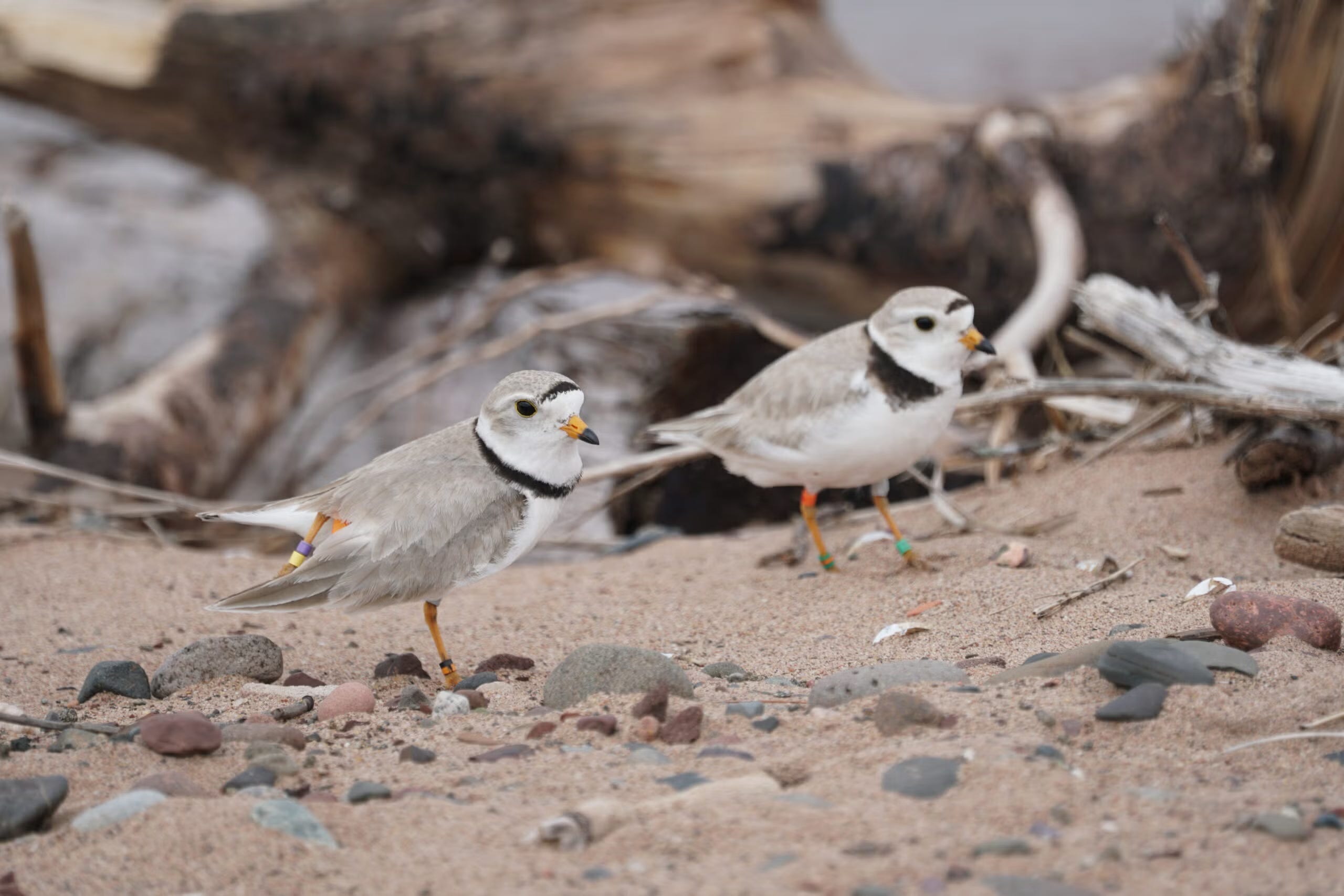
Some birds even accept with grace RFID tags or other high-tech surveillance hardware that allow governmental agencies, educational institutions, and even private individuals to keep tabs on their whereabouts.

Most banded birds are not tracked that closely and may live the rest of their lives no one the wiser that they’d ever been detained.
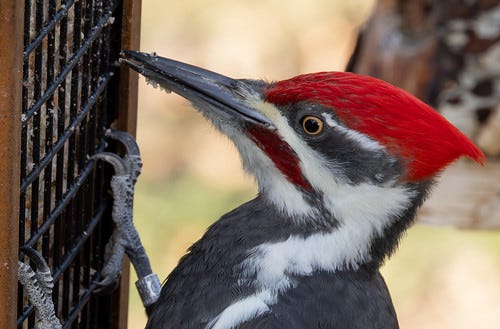
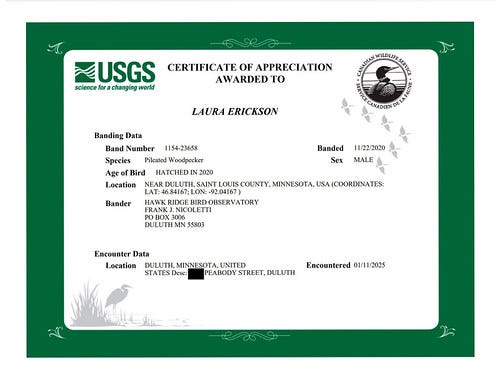
One male Pileated Woodpecker bearing an ankle monitor turned up in my own yard in 2021. Unlike far too many humans, he had not been scarred by his encounter with his captor, and in exchange for my keeping my suet feeders well supplied, he allowed me to photograph his ID, though it took patience and persistence on my part. I took dozens of photos on different occasions before I could tease out the entire 9-digit number. I reported him to the federal government during each of the five calendar years that I saw him knowing he would not be subjected to any harassment, mistreatment, or another detention. After my first report, I learned that “BB” (for Banded Boy) had originally been banded as a first-year bird by Frank Nicoletti up at Hawk Ridge on November 22, 2020. When I send the Bird Banding Lab the report each year, I get a PDF certificate, which suggests I’ve become participant in the surveillance state.
This past February, a female Pileated Woodpecker wearing similar hardware showed up, but she was much more suspicious of me, departing as soon as I noticed and photographed her leg band; she never came back.

The photo I took of her showed the band numbers upside-down compared to BB’s, and my only clear photos revealed just two digits.


Then on September 14, I noticed a female wearing the same kind of leg band, this one oriented the way BB’s was.

This female does not seem to mind me at all and has allowed me to take more than a hundred photos of her band. So far I’ve worked out eight digits in the string, so if BG (Banded Girl) sticks around and I get the entire 9-digit number, I’ll report her to the feds, too.

I very much object to the surveillance state and many policies of our current government when it comes to human beings, but there are some legitimate reasons to get data from us, such as tracking diseases or learning how air and water quality in different areas affect the people living there. But in just about every case I know of, keeping track of birds via leg bands and other legal means has turned out to be beneficial for bird populations without harming individuals. As long as BB and now BG had to endure getting that low-tech ankle monitor in the first place, and have to keep wearing it, I might as well do what I can to ensure that we learn what we can to keep Pileated Woodpeckers thriving here in Duluth and beyond.


This is obviously a Shakespearean reference.
You had a lot of fun with this one, didn’t you?! 😆
It’s very clever!! ☺️
I hope you don’t get in trouble for promoting the causes of migrants! 😉
I have never seen a banded bird here, but my friend that volunteers with Lights Out in Cleveland may have come across injured or dead birds. I will have to ask her.