


(Listen to the radio version here.)
On Friday, October 9, I flew to Florida to visit my firstborn son, Joe. Sometimes I still slip and call him Joey, and most of his friends call him Toast, but by any other name he’s just as fine a human being. And Friday was the perfect day to fly there because Saturday was his birthday; Wednesday the 7th was my son Tom’s birthday and Thursday the 8th my son-in-law Michael’s birthday. It’s convenient to have a travel day between the Duluth and Florida birthdays of my three sons.
I’ve visited Florida many times now, once while I was in high school, well before I was a birder or knew much of anything about nature. My family took a vacation in Miami Beach in the summer of 1968, and drove through a place called “Monkey Jungle,” with monkeys up in trees staring at us. They weren’t in cages and everything about Florida seemed so very exotic and tropical that I thought monkeys must be part of its natural environment. I had no idea what species they were because even at that late date, when I was about to graduate #1 in my class of about 450 (I am not making that up), I didn’t realize there were different species of monkeys.
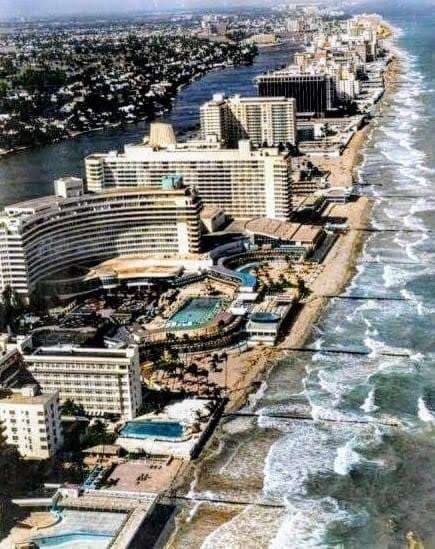
The hotel we stayed at was one that boasted of its “exclusive beach,” meaning it was walled off from the beaches of the hotels on either side. Erosion was destroying the beach already, and those walls exacerbated it, so the hotels were constantly dumping new sand in them.
Macaws, other parrots, and flamingos were on display at many attractions, so I assumed they were genuinely wild and belonged in Florida’s natural environment just like those monkeys. Several species of parrots are now established in the state, but none are native. The bird that brought my North America Continental list to 700 was one of those exotic parrots—the Mitred Parakeet that I saw at a most exotic, unnatural spot, the Biltmore Hotel in Coral Gables, in 2023.1

Florida’s avifauna did once include a native parrot, the Carolina Parakeet, which survived in the state after it had been wiped out elsewhere in the southeast.

There’s credible evidence that the Carolina Parakeet survived in the wild in Florida for almost a decade after the last one in a zoo died in Cincinnati in 1918. The Florida Museum of Natural History in Gainesville has in their collection three eggs, documented as from Carolina Parakeets, collected on the Kissimmee Prairie by the museum curator, Charles Doe, in 1927. In the 1980s and 90s, longtime Florida naturalist Dr. Noel Snyder searched out corroborating details from longtime residents of the area and got what he felt substantiated the authenticity of the specimens.

American Flamingos are native to Florida, but even back in the days of Audubon were very rare and hard to find there. I’ve seen bazillions of flamingos in the state, at Disney World’s Animal Kingdom and other tourist attractions, but those were captive birds, their wings pinioned. I’ve heard people say that flamingos are flightless, but wild ones most assuredly fly, as my Cuban photos prove.

But I’ve never once seen a flamingo aloft in Florida. Indeed, in all the trips I’ve made to the state, I’ve seen just one wild flamingo, and on just one occasion—when Russ and I were down there for Joe’s birthday in 2024, and it was the birthday boy who first spotted it. That was a year after Hurricane Idalia pushed as many as 300 flamingos across at least 10 states.


My only really close-up photos of American Flamingos are of captive birds. The best were taken at a Kissimmee tourist attraction called Discovery Cove.

Every morning the staff there parade a flock of flamingos from their overnight shelter to a spacious daytime enclosure. That parade is a popular morning tradition at the Discovery Cove.

My best photos of wild American Flamingos were taken in Cuba in October 2016—there were plenty of them, many quite close to the roads.


I had a better camera when I visited Cuba in February 2025, but the population had been significantly reduced by devastating hurricanes, and the birds were much further from accessible roads because it was the peak of a long dry spell and the wetlands had receded. Still, I had lovely looks.

For a person whose favorite bird of all is the Black-capped Chickadee, it seems a little odd how much pleasure I take in this bizarrely flamboyant bird.

Since Hurricane Idalia, quite a few flamingoes are continuing to be reported in Florida, mostly in the Everglades and from the kayak launch at the Haulover Canal on Merritt Island. We always spend a day at Merritt Island when we visit our son—it’s one of our favorite places—so of course we checked it out, but this time, no luck, even with Joe searching. A man running kayak tours told me that the current pattern seems to be that they spend spring and summer there but then leave for the winter. We also got skunked on that other supremely flamboyant native bird, the Roseate Spoonbill.

Every time a birder visits a place and sees new birds, that leaves fewer possible new birds the next time they go there. But as much as I like lifers, what I love are birds—both new ones and those I’ve seen plenty of times before. I don’t like contributing to Florida’s economy at a time when the state’s politicians and many of its people are trampling the human and environmental values I hold dear, but I hold my children even dearer. On this trip, I may not have seen a single exotic parrot or a flamingo, but Russ and I did see plenty of other birds, almost all of them in the company of that beloved son. What could be finer?

Fortunately, later that year the American Ornithological Society lumped two birds on my life list (the Cordilleran and Pacific-slope Flycatchers) into a single species, the Western Flycatcher. Usually I’m upset when I lose a bird on my list, but for once, I was thrilled—that dropped the next bird on my life, the NATIVE Smooth-billed Ani I saw in Florida a few days after the parakeet, from #701 down to that golden #700 spot. Because of lumping and splitting, numbers on life lists do shift from year to year—this is only significant for my personal milestones when those lumps or splits come in the very year that I hit one, so I’m very happy the AOS didn’t delay this change till the following year. It would have been sad to have an exotic species in that magical position.
Thanks for your lovely recollections!