


(Listen to the radio version of Part 1 here and Part 2 here.)
During our 5 years in Madison, Russ was immersed in coursework and research, working on his Ph.D. and then a post-doc. This gave me almost every weekend to head out, near and far, with my new birding buddies. Within the first week of moving there, I discovered my personal Shangri-la—a park on the University of Wisconsin campus called Picnic Point. It was a short walk from our apartment, and I got into the habit of going there at least once a week throughout the year when we were in town. During spring migrations, I’d head there at 4 am every weekday unless it was storming; I’d bird until I had to catch my bus or hop on my bike to get to work. I saw only a handful of lifers there, but every single time I went, I left feeling very happy. Little by little, my life list was growing, but even when I went weeks or months between lifers, I was in a state of bliss.
By the time winter break came in 1978, my life list stood at 278, all 64 new additions since we’d left East Lansing seen in Wisconsin. Russ had to attend and present at a scientific meeting in Corpus Christi, Texas, starting January 2, 1979, and the university would pay for his flight or mileage and some of his lodging, so we made it a road trip. I was eager and excited, but very inexperienced about knowing where to go. My plan was just to look for a few nearby national wildlife refuges, go to the offices to get checklists and info, and trust to luck, but one of my birding buddies said that wasn’t the way to do it. He loaned me his copies of two amazing books—James Lane’s A Birder’s Guide to the Rio Grande Valley of Texas and A Birder’s Guide to the Texas Coast.
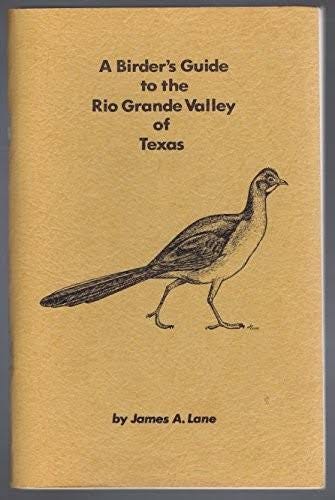
The Lane books, which evolved into the American Birding Association’s “Birder’s Guide” series, were for decades the most important resource traveling birders had, showing all the possible birds in the covered area, with graphs showing seasonal abundance and information about where the most localized ones were most easily seen, even providing such detailed information as what boat ride would be guaranteed to give me good looks at Whooping Cranes. I still love browsing through my copies when I’m planning a trip, but eBird now provides just about all the information of those books with up-to-the-moment updates, and the ABA no longer publishes them. They do produce a wide variety of resources for birders which you can learn about here.
We celebrated Christmas early with Russ’s parents and sister in Chicago. While we were there, the Chicago Rare Bird Alert reported both a Barn Owl and a Northern Saw-whet Owl on the grounds of the Lincoln Park Zoo (they were probably eating rodents drawn to the zoo animals’ food), so on December 23, before we’d even traveled anywhere new, I added two lifers—an auspicious start for a birding adventure!


We spent Christmas morning wandering aimlessly around Cahokia Mounds State Park in Illinois and a couple of St. Louis neighborhoods hoping against hope that a Eurasian Tree Sparrow would turn up, but no luck.1 The next day I saw my lifer Ferruginous Hawk as we drove through Oklahoma, and going through Texas the next day, I added Great-tailed Grackle, Harris’s Hawk, and Lark Bunting, all from the car—lifers along an interstate weren’t all that difficult during the years after Richard Nixon set the national speed limit at 55.2
On December 27, with six days of birding together before Russ’s meeting, we reached the end of I-35 in Laredo and headed southeast for Falcon State Park, where we would camp for two nights. Many of the snowbirds spending the winter in the campground set out bird feeders or scattered seeds at their sites, and they seemed very happy to share the cool birds they attracted. We arrived over an hour before sunset. Russ set up our tent and made dinner while I birded.

Within that short time, I saw six lifers:
Pyrrhuloxia

Greater Roadrunner

Scaled Quail


Olivaceous (now Neotropic) Cormorant

Curve-billed Thrasher

White-necked (now Chihuahuan) Raven

Common Pauraque

I crept out of my sleeping bag at first light and saw something I never knew was possible—roadrunners were perched in trees and I saw some in flight.

I guess I’d become so used to the Looney Tunes version of roadrunners without even thinking about it, but of course roadrunners belong to the same family as cuckoos, and even if running is their primary mode of transportation, they’re safer at night in trees. (Even after learning this, I was still shocked a few months later to learn that Wild Turkeys also fly and roost in trees.)
That morning I saw even more birds at the campground.
Golden-fronted Woodpecker

Great Kiskadee

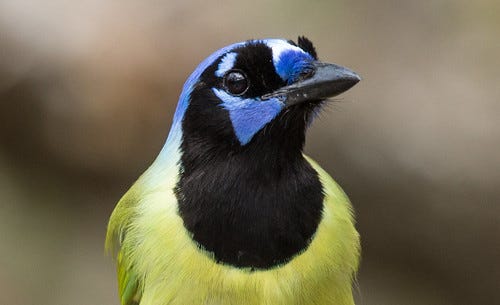
Green Jay

Lichtenstein’s (now Altamira) Oriole

I listed Black-legged Kittiwake in my field notebook and had it on my life list until one of my experienced birding friends told me that was highly improbable and required documentation. In my notes, I’d written that I’d seen several, so I suspect that they were actually probably just Ring-bills. I finally saw a real Black-legged Kittiwake on September 11, 1983, at Stony Point, up the shore from Duluth, with Kim Eckert confirming it. And on Kim Eckert’s 2013 Texas trip during my Big Year, we saw a real one in Texas. I’ve also seen them multiple times in Alaska, where they breed.
The Lane guide mentioned specific spots where we could see some wonderful specialties. We missed Ferruginous Pygmy-Owl at Falcon Dam, the only place they were considered at all likely at the time, and missed the Tamaulipas Crow (then called the Mexican Crow) at the Brownsville Dump—as it turns out, the dump had been moved since the book was published and we were at the old site. I did add the species at the right dump on Kim Eckert’s 1991 Texas trip. The crows don’t show up there with any regularity anymore—there hasn’t been an accepted record anywhere in the U.S. since 2021. That one at the dump 35 years ago remains the only one I’ve ever seen anywhere.
Lane’s guide also gave instructions for how to see Brown Jays at the only place they were at all reliable this side of the Rio Grande, at the Santa Margarita Ranch. He said to drive up the gravel road until we encountered a person, hold up our binoculars and say “Pajaro,” and hand the guy $1 apiece. The birds were on the far side of the river at first, but as if they had also read Lane’s guide, when two of them spotted us, they obligingly flew right across to a nearby tree. In 1991, I saw a group of 5 at Salineño on Kim Eckert’s Texas trip in 1991. Those are the only times I’ve ever seen Brown Jays in the United States, though I’ve seen them multiple times on all four trips I’ve made to Costa Rica and several times when I attended an American Ornithologists’ Union meeting in Veracruz, Mexico. Oddly enough, I’ve never been able to get a photo! [Oops—since publishing this I discovered that I DO have one photo, taken in 2007 in Costa Rica. Not a good photo, but the only one I have.]

At the Santa Ana National Wildlife Refuge, I saw my lifer Plain Chachalacas.

The encounter was far more up close and personal than I ever dreamed possible thanks to one of the refuge staff who handed me a small bag of cracked corn, winked as if to indicate that this was our little secret, and told me to scatter it when I saw the birds. Russ even got a photo.

At Bentsen-Rio Grande State Park, I hit a milestone—two ethereally lovely White-tailed Kites flew overhead, #300 on my life list. Russ got a photo when one alighted with prey.

Russ was very anxious that I see a Whooping Crane—that iconic, charismatic bird was critically endangered, and a major element in the passage of the Endangered Species Act. So we moved on to Rockport to take the ride on the M.V. Whooping Crane boat on December 30—the plan was that if we missed the cranes, we’d have another chance before Russ’s meeting started January 2.

I was oddly confident that we’d see one—it was the only lifer I’ve ever added that was literally guaranteed—the boat company’s sign said they gave a refund if we didn’t see a Whooping Crane on the ride. Sure enough, we saw several, including a couple of family groups close enough that Russ’s pictures turned out pretty well.

I saw seven other lifers from the boat, including the Reddish Egret…

… and some gloriously bizarre Roseate Spoonbills.

It was about as perfect an experience as I could have hoped for.
So now we had New Year’s Eve and New Year’s Day to backtrack a bit before Russ’s meeting started. That’s when we had one of the scariest moments of the trip for Russ and one of the jolliest for me. At some point in farm country, in late afternoon, somewhere near Laguna Atascosa, we got hopelessly lost. The sky was too overcast to even guess where the sun might be, and the gravel roads weren’t at all marked. As a child, Russ had once been lost in the woods at night at a Boy Scout camp—a genuinely terrifying situation—and ever since, he virtually always takes great pains to know exactly where he is, so he was feeling panicky, and if that wasn’t bad enough, he suddenly noticed that the fuel gauge was pointing directly to E, or maybe a even little lower.
Meanwhile, whenever I get lost, something lovely seems to happen, so I’m not fazed by it, and here we were in Texas, birds everywhere. I obviously had to look ahead for road signs or any other indications of where we might be, but my thoughts were mainly on birds, and WHOA—suddenly I spotted a pair of good ones—Crested Caracaras feeding on a carcass out in a field. Frantic as he was, Russ stopped and even took a photo of them through the car window.

The birds were apparently lucky for both of us—within a mile, we came to a small town that we could see on our maps, with a gas station to boot.
Since then, I’ve seen Crested Caracaras in Cuba, Costa Rica, Peru, and Guyana, and they’ve become much easier to find in both Texas and Florida. The most surprising place I’ve seen one in was in northern Wisconsin in June 2024. It was a stakeout bird, and the only day I could get away it was raining, but I was thrilled…

…but somehow not as thrilled as when I saw that first one with Russ.
On New Year’s Day, Russ and I set up camp at Goose Island State Park, a short drive to Russ’s meeting and perfect for me to roam about birding. The biggest pleasure at Goose Island was seeing the shorebirds—including four beautiful new ones—Piping, Wilson’s, and Snowy Plovers and American Oystercatcher.


I got to mosey along on the beach, sitting wherever I felt like it to savor something special, filled with a deep joy and feeling at one with the universe. Yet as wonderful as it was, I missed the special luster of birding with Russ.
I ended the trip with 172 species for the trip, 47 of them lifers, bringing my life list to 326. I’ve always loved numbers, and these numbers seemed astonishing and wonderful. But it wasn’t the numbers that filled me with love. My heart overflowed with love for birds long before I saw my first chickadee, long before I met Russ. Listening to House Sparrows cheeping away outside my bedroom window when I was very small, telling one another, and me, about their adventures, filled my heart with love and a feeling of belonging. Robins and cardinals singing away as I skipped to school during first and second grade made me flap my arms, feeling as free and happy as a bird (or as free and happy as I thought birds must be). After I learned to whistle and imitated a cardinal well enough that he flew to a branch by my bedroom window and his eyes looked directly into mine, the thrill, and the love I felt for him, were almost overpowering. Now the whole world seemed to be opening wide for me—a world as big as Earth herself.
I’ve been to Texas many times since this first trip, usually on my own or with a birding group, not with Russ. The M.V. Whooping Crane has long been out of commission, but Russ and I went together on the M.V. Skimmer captained by Tommy Moore in 2011.

I took a bazillion photos which I treasure.

But the photos Russ took so long ago remain my favorites.

I’m sure that even without Russ, I’d eventually have discovered field guides, bought a pair of binoculars, learned about the Lane guides, and seen a lot of birds. But the fact that he has been so deeply embedded in my birding from the beginning magnifies all the joy, all the richness of experience, and all the love.

Texas has changed a great deal since we were there in 1978, but the birding is still spectacular and some of the birding spots much more accessible. One great introduction to the area, with wonderful field trips to many of the places I visited so long ago, is the Rio Grande Valley Birding Festival. This year it’s scheduled for November 11–15.

I saw my lifer Eurasian Tree Sparrow on October 28, 2004.
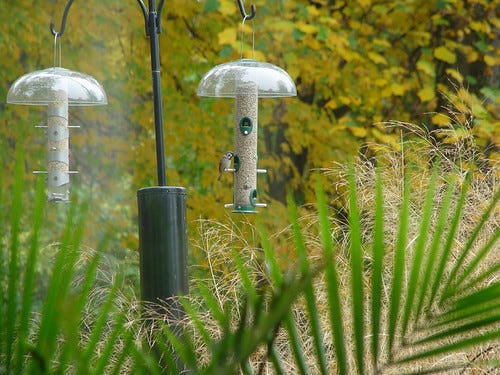
A birder I’d connected with on the BirdChat listserv, Connie Alwood, invited me to his house to see my lifer—it was a regular at his feeders. The night before, I stayed in southern Illinois with Karen Thompson, one of my closest friends from high school and college, and drove into St. Louis first thing in the morning. From the moment I entered the city, a pervasive sense of profound loss filled the air. It felt genuinely weird, but I could not shake the feeling that something horrible had happened, so I turned on the radio. Sure enough, the night before, the Boston Red Sox ended the Curse of the Bambino by defeating St. Louis right there in town. (Being a Cubs fan, I never had to pay attention to the postseason.) Fortunately, I had better luck than the Cardinals.
His intent was to reduce our dependence on oil during that decade’s oil crisis, but this mandate accomplished ever so much more. During the time it was in force, Nixon’s emergency measure saved tens of thousands of human lives, millions of animal lives, and significantly lowered our fossil fuel consumption. But this being America, Bill Clinton signed the law rescinding the lower speed limit in 1995.