


(Listen to the radio version here.)
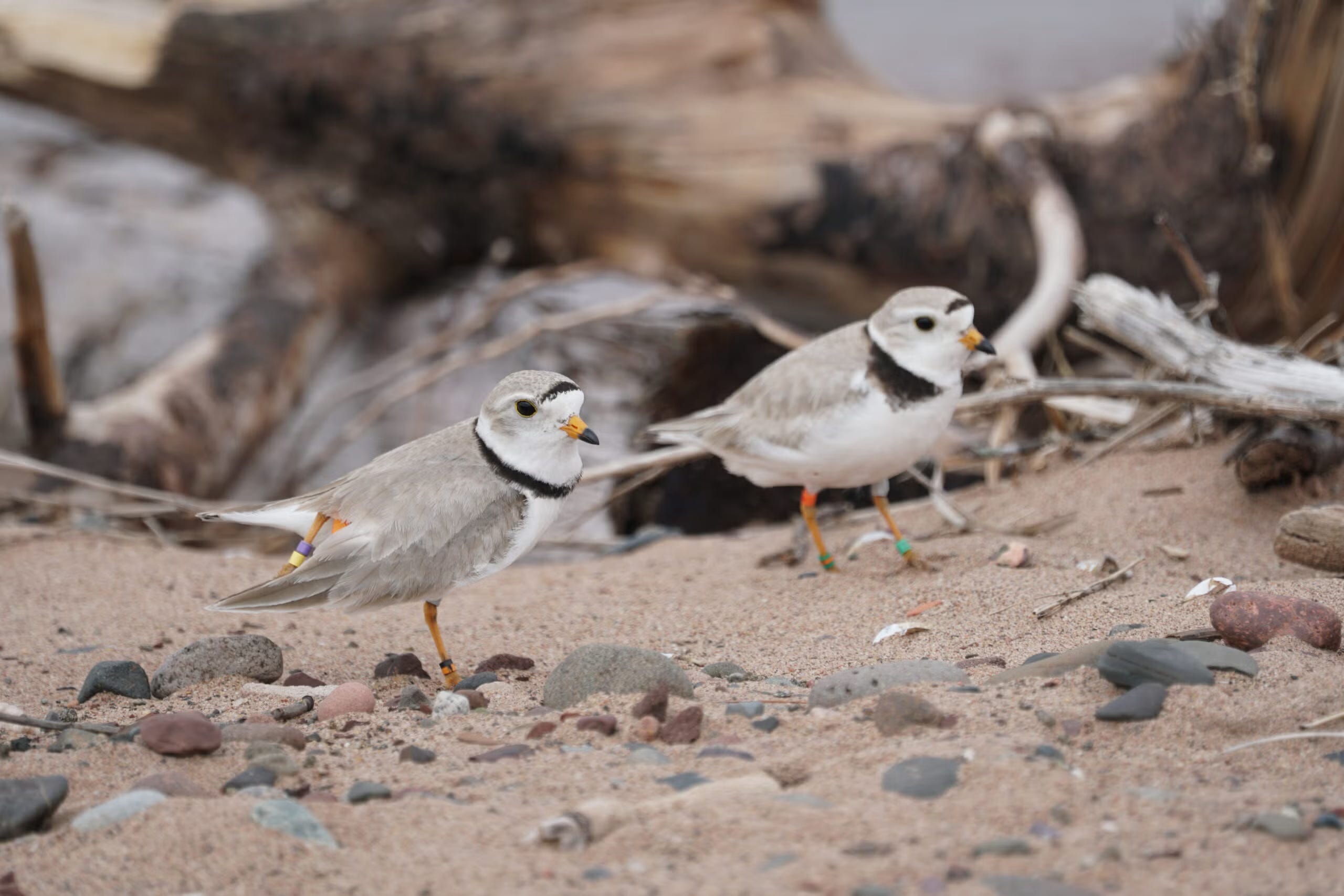
At the end of August, several friends sent me a wonderful news story from the St. Louis River Alliance and from Wisconsin Public Radio: this summer, for the first time since 1977, a pair of Piping Plovers nested on Wisconsin Point in Superior.
The habitat on the Wisconsin Point Bird Sanctuary where the plovers nested was developed thanks to years of collaboration among the U.S. Army Corps of Engineers, U.S. Fish and Wildlife Service, Wisconsin Department of Natural Resources, St. Louis River Alliance and U.S. Environmental Protection Agency, with funding through the Great Lakes Restoration Initiative. In 2019, they placed clean material dredged from the Duluth-Superior Harbor navigation channel along an existing sand spit in the state-owned sanctuary, creating about 14 acres of new nesting and foraging habitat.
Unlike the movie Field of Dreams, the idea that “if you build it, they will come” is more than a matter of faith and hope when it comes to restoring habitat for endangered birds. There were plenty of people to come to Kevin Costner’s ballfield, but what about a species so endangered that there are none remaining to come? In 1990, barely a dozen breeding pairs remained in the entire Great Lakes area, all in Michigan. But thanks to all the work done by so many people for lo these many years, Piping Plover numbers have been rising. Habitat improvement throughout the region, painstaking research, and the tireless efforts of volunteers and a host of organizations paid off: this summer there were 99 nests in the Great Lakes population, at least some on each of the five Great Lakes. This is the most since the species was listed as endangered in 1986 and up from 88 last year.

Those 88 nests produced the two birds that nested on Wisconsin Point this year. I was told that the female was banded in the Apostle Islands last summer by Sumner Matteson, who just retired from the Wisconsin DNR and has been one of my long-standing heroes in bird conservation. The male came from a nest on Fisherman’s Point in Michigan last summer. He was raised in captivity.
Captive rearing has been used in the Great Lakes since 1992 to salvage eggs that would otherwise have no chance of survival after a nest is abandoned, usually because one of the parents is killed or high water floods the nest. The salvaged eggs are taken to the University of Michigan Biological Station near Pellston, where the Detroit Zoo manages a captive rearing facility for Great Lakes Piping Plovers. They’ve developed protocols to incubate the eggs and care for the chicks that hatch until they can fly well and are ready to be released back into the wild. Whenever possible they are released near wild-reared chicks of about the same age. The survival rate of captive-reared plovers is slightly lower than that of wild chicks, but their fledging success is much greater—at least 90 percent compared to only about 50 percent in wild-raised chicks. This technique has definitely been an important element in restoring the Great Lakes Piping Plover population.

This year, 160 wild chicks and 24 captive-reared chicks fledged. The recovery goal for the Great Lakes population is 150 breeding pairs, much less than the historic 500–800 pairs that long ago bred on the five Great Lakes, but 150 breeding pairs should constitute a sustainable population, and we’re well more than halfway there now.
In May, a Piping Plover monitor with the Bad River Band of Lake Superior Chippewa noticed a pair engaging in breeding activities on the sanctuary and notified the St. Louis River Alliance, the organization that has been involved in Piping Plover monitoring, habitat maintenance and public education in the Duluth/Superior area since 2012. Each spring and summer, Alliance staff and volunteers help care for potential nesting areas while watching closely for migrating plovers.

Predation is a huge problem with Piping Plover nests, which are simple indentations, called “scrapes,” in the sand above the high-water line on beaches, with very little vegetation. The eggs are cryptically colored but vulnerable to sharp-eyed gulls and corvids and to sharp-nosed skunks and raccoons. Predators took this year’s eggs, but young birds who successfully find a mate usually return to the same nesting area the following year, so chances are good that these birds will come back, with more experience and so a greater likelihood of success.
For a great many reasons, Piping Plovers are in my Top Ten list of favorite birds.1 The St. Louis River Alliance and so many others have been working so hard for so long to help restore them to the Duluth-Superior area with only glimmers of hope. It would be ever so wonderful if next year, on the 50th anniversary of the last nest on Wisconsin Point, this splendid pair successfully brings new Piping Plover chicks into the world.

.

Well, okay. There is currently a 75-way tie for fourth place.
It was a marvelous day, indeed. ❤️
Thanks, Laura! Reading this made my day, partly due to my Wisconsin roots and loving to read about anything Wisconsin from afar in New Hampshire, partly because the babies are so adorable, and partly because it's so good to start off my day reading something positive and life-affirming. Thanks again!