


(Listen to the radio version of Part 1": Passenger Pigeon and Carolina Parakeet here, and Part 2: Ivory-billed Woodpecker here.)
(In anticipation of a wonderful novel being released in November, this post focuses on a few birds on the verge of extinction. Carl Bendorf’s The Last Warbler, a gripping and suspenseful eco-adventure set in 1978, focuses on some birders searching for Bachman’s Warbler during a decade when people were still holding out hope that at least a few individuals remained.)

Most people intuitively understand what an extinct species is and what a critically endangered species is, but there’s a murky period between certainty that a species still exists and certainty that it doesn’t. How many years must elapse after the last confirmed sighting of a bird to officially declare it extinct? And how much proof should a scientist or birder have to furnish for a sighting of a vanishing species to be confirmed?
We simply cannot know when the last wild individual of a species dies. For decades, people believed that the last confirmed sighting of a wild Passenger Pigeon was on March 24, 1900, when a boy named Press Clay Southworth killed a female Passenger Pigeon with a BB gun near Sargents, in Pike County, Ohio. His parents identified the bird and sent it to a taxidermist; it was later donated to the Ohio Historical Society. But over a hundred years later, Joel Greenberg, researching his splendid book about the Passenger Pigeon, A Feathered River Across the Sky, unearthed evidence that two birds had been authenticated later than that: a male shot in Oakford, Illinois on March 12, 1901, was stuffed and is in the Millikin University collection in Decatur, Illinois; and a male shot near Laurel, Indiana, on April 3, 1902, was verified and stuffed but later destroyed.

Without a gun, seeing was not believing back then, even when the person reporting a sighting was extremely credible. Acclaimed ornithologist Alexander Wetmore reported seeing a pair of Passenger Pigeons flying near Independence, Kansas, in April 1905. Two years later, on May 18, 1907, Theodore Roosevelt, President of the United States at the time, a longstanding member of the American Ornithologists’ Union, and life-long outdoorsman, documented a “flock of about a dozen two or three times on the wing” while on retreat at his cabin in Pine Knot, Virginia. He wrote that they lit on a dead tree “in such a characteristically pigeon-like attitude.” His sighting was corroborated by a credible local man. But neither Wetmore’s nor Roosevelt’s report was accepted by most authorities.
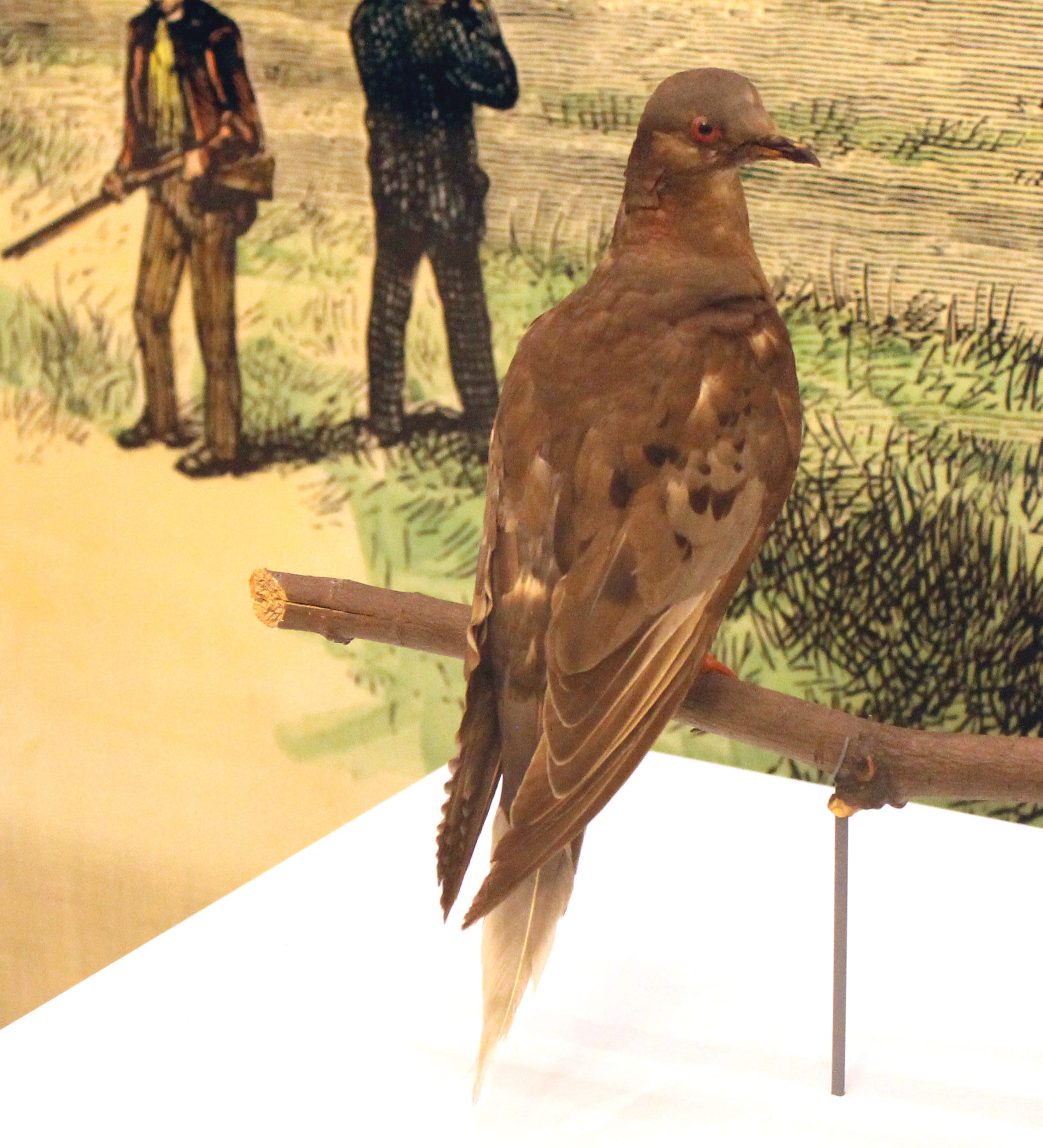
“Martha,” the famous last Passenger Pigeon of them all, was raised in captivity and died at the Cincinnati Zoo on September 1, 1914, when she was about 29 years old. Her existence over a decade after the last Passenger Pigeon in the wild was shot made her a celebrity, and her death was reported world-wide. My Grandpa, who was 18 when she died, told me he’d read about it in the newspaper. The date of her death has always marked the official date of extinction for the species because not one Passenger Pigeon was ever found after that.


The last zoo-kept Carolina Parakeet, a male named Incas, died in the same cage as Martha did at the Cincinnati Zoo three and a half years later, on February 21, 1918. His body was supposed to be sent to the Smithsonian in a block of ice, as Martha’s was, but it never arrived.
At the time, there was still hope that at least a few individuals might be found, and indeed, there’s credible evidence that the Carolina Parakeet survived in the wild in Florida for almost a decade longer. The Florida Museum of Natural History in Gainesville has in their collection three eggs documented as from Carolina Parakeets, collected on the Kissimmee Prairie by the museum curator, Charles Doe, in 1927. In the 1980s and 90s, longtime Florida naturalist Dr. Noel Snyder searched out corroborating details from longtime residents of the area and got what he felt substantiated the authenticity of the specimens. The American Ornithologists’ Union did not declare the Carolina Parakeet extinct until 1939.

Clinging to hope that a disappearing species still exists is natural for people with any sense of empathy or love of nature, and birders yearning to see every possible species can’t help but be hopeful for more selfish reasons as well. But some people and corporations have a vested interest in wanting endangered species to disappear altogether. When a species is officially declared extinct by the U.S. Fish and Wildlife Service, its habitat on private and even public land loses what little legal protection it still had. So lumber companies, power companies, developers, landowners, large corporations, etc. routinely try to discredit even valid reports of endangered birds.

In 2004, Tim Gallagher of the Cornell Lab of Ornithology, a well-known, respected, and knowledgeable birder, and his friend Bobby Harrison documented a sighting of an Ivory-billed Woodpecker in Arkansas. The Lab put together a search to get photos, sound recordings, video, and any other physical evidence that the bird still existed.
The last confirmed sightings of the Ivory-billed Woodpecker took place some seventy years before that, all in the “Singer Tract” 1 in northeastern Louisiana—in 1935, when Cornell scientists got photographs and recordings; 1937-1941, when researcher James Tanner conducted a comprehensive study2 of the species; 1943, when Audubon’s Richard Pough found a single female during a 6-week search, and 1944, when artist Don Eckelberry, on Pough’s advice, spent two weeks observing and sketching a female—the last universally accepted sighting of the Ivory-billed Woodpecker ever in the United States.
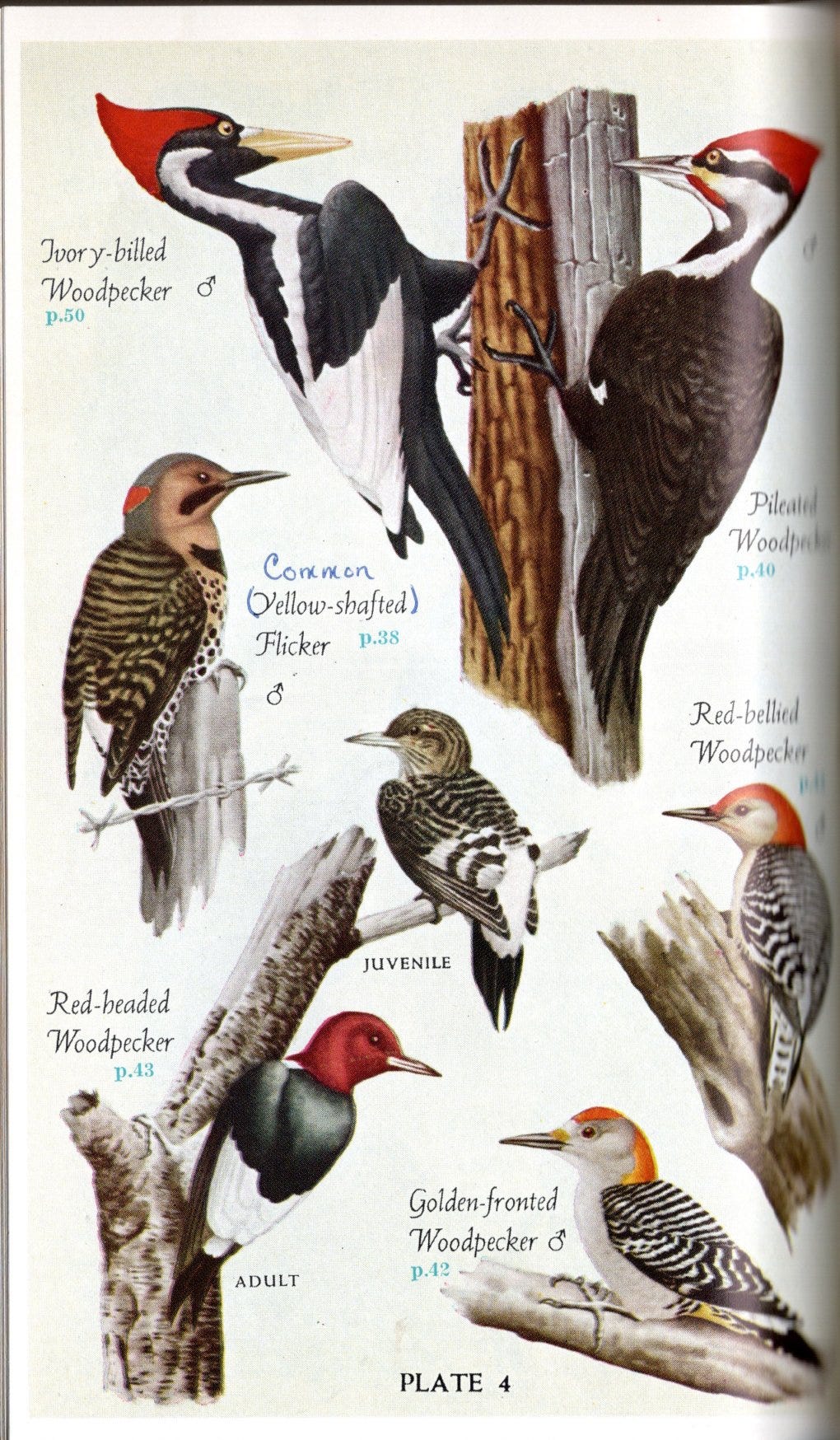
I was thrilled to hear Cornell’s big announcement of Gallagher and Harrison’s sighting and eager to go to Arkansas to help with the search. I’d have joined the Lab team in a heartbeat (the Cornell Lab of Ornithology has long been my personal Mecca), but Cornell University (not the Lab itself) insisted on full ownership of all photos and recordings taken by everyone on the team, and no one on the team would be allowed to share publicly any information about the search that hadn’t been vetted by university officials.
At the time, I was writing a blog for a local optics company; to justify paid time to go to Arkansas, I obviously had to write about and post photos of the trip. I wouldn’t have minded handing over all rights to any photos, video, or sound recordings I managed to get of a real, live Ivory-billed Woodpecker,3 but I needed pictures of scenery and habitat, everyday birds like Tufted Titmice, the souvenirs I bought and people I met, and those kinds of things for my blog. So I put together my own “team”—me, my friend Paula Lozano, and my little dog Photon, and we lit out for the territory on January 2, 2006. Once in Arkansas, we added a fourth team member, Jimmy (named for James Tanner), a large wooden Ivory-bill created by Brinkley artist Rita Moore. Jimmy migrated north and now lives in my living room.


Before the search was even underway, some people were already discrediting Gallagher and Harrison’s report, several quite vigorously. The last universally accepted and undisputed sighting of an Ivory-billed Woodpecker in the United States was Eckelberry’s in 1944, and the last in Cuba in 1986 and 1987. Some extremely competent birders, researchers, and conservationists had spent decades in good habitat from Florida to Texas and never found, or at least documented with photos, recordings, feathers, or other indisputable evidence, an Ivory-bill.
Some of the naysayers figured it was time to let go and focus limited conservation dollars and effort on species that had a better long-term chance of survival if given enough resources. Others seemed more driven by arrogance or competitiveness than altruistic motives—some of the most vociferous skeptics had far less birding experience than even I did but enjoyed spouting off. Either way, they gave fodder to developers, lumber companies, and right-wing organizations framing any regulations to protect endangered species as government overreach, anti-business, and interference with lands that could be used for lumber, agriculture, or development to benefit nothing more than tree-huggers and birds that were not worth saving even if they did still exist.
When I went to Arkansas, I had absolutely no expectation that I’d see one whether they still existed or not, and sure enough, I spent 27 days of January 2006 not seeing an Ivory-billed Woodpecker in Arkansas. But then again, I’ve spent the other 27,351 days of my life so far not seeing an Ivory-bill anywhere else, and I’m still a fundamentally happy person who treasures my memories of that wonderful adventure.
The Ivory-billed Woodpecker’s status has stayed contentious. In September 2021, the U.S. Fish and Wildlife Service proposed removing the species from the Endangered Species list and declaring it extinct, but so far neither they nor the American Ornithological Society has pulled the plug, even as not one conclusive photo, video, or sound recording has come to light. Like Schrödinger’s cat, we simply cannot know with absolute certainty whether the species is alive or dead.
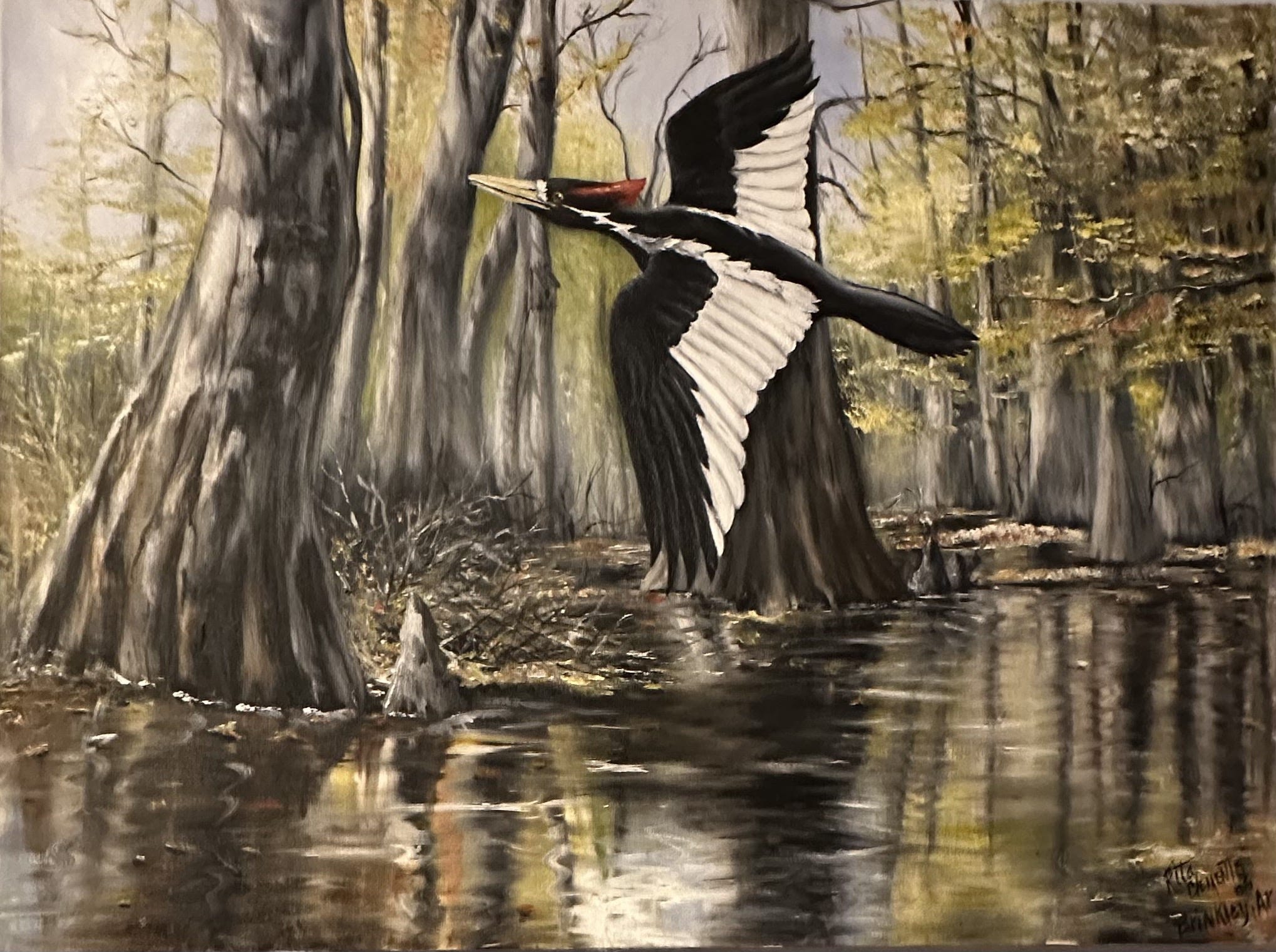

The history of the famous Singer Tract is as depressing as it is fascinating. In 1913, Douglas Alexander, president of the Singer Sewing Machine Company, bought about 83,000 acres of virgin bottomland forest in Madison Parish in northeastern Louisiana. He wanted to ensure an ample supply of gum timber with which to build cabinets for his sewing machines, though he prohibited hunting and cutting lumber on the land and never himself harvested any trees there. Between 1913 and 1918, he added an additional 45,000 acres, bringing his total holdings in that part of Louisiana to around 130,000 acres.
Meanwhile, in 1932, a Madison Parish lawyer killed an Ivory-billed Woodpecker and brought it to Baton Rouge conservation officials to prove he knew where they were still living. Ornithologists flocked there and confirmed this, and in 1935, a team of four from Cornell University headed to the Singer Tract: Dr. Arthur Allen, Peter Paul Kellogg, artist George Sutton, and young graduate student named James Tanner. They brought back photos and sound recordings. Tanner returned in 1937 to conduct a 3-year study on the birds, but that same year, Singer sold a 6,000-acre tract to Tendal Lumber Company, and in 1939, Singer sold the timber rights on the remaining acreage to Chicago Mill and Lumber Company. The land was doomed, but it would take time to log the entire tract.
In 1943, Audubon’s Richard Pough went to Singer and, in six weeks of searching, found a single bird—a female. Audubon artist Don Eckelberry went to the area in 1944 and found a female that he sketched in the field and later painted—the final confirmed sighting in the U.S..
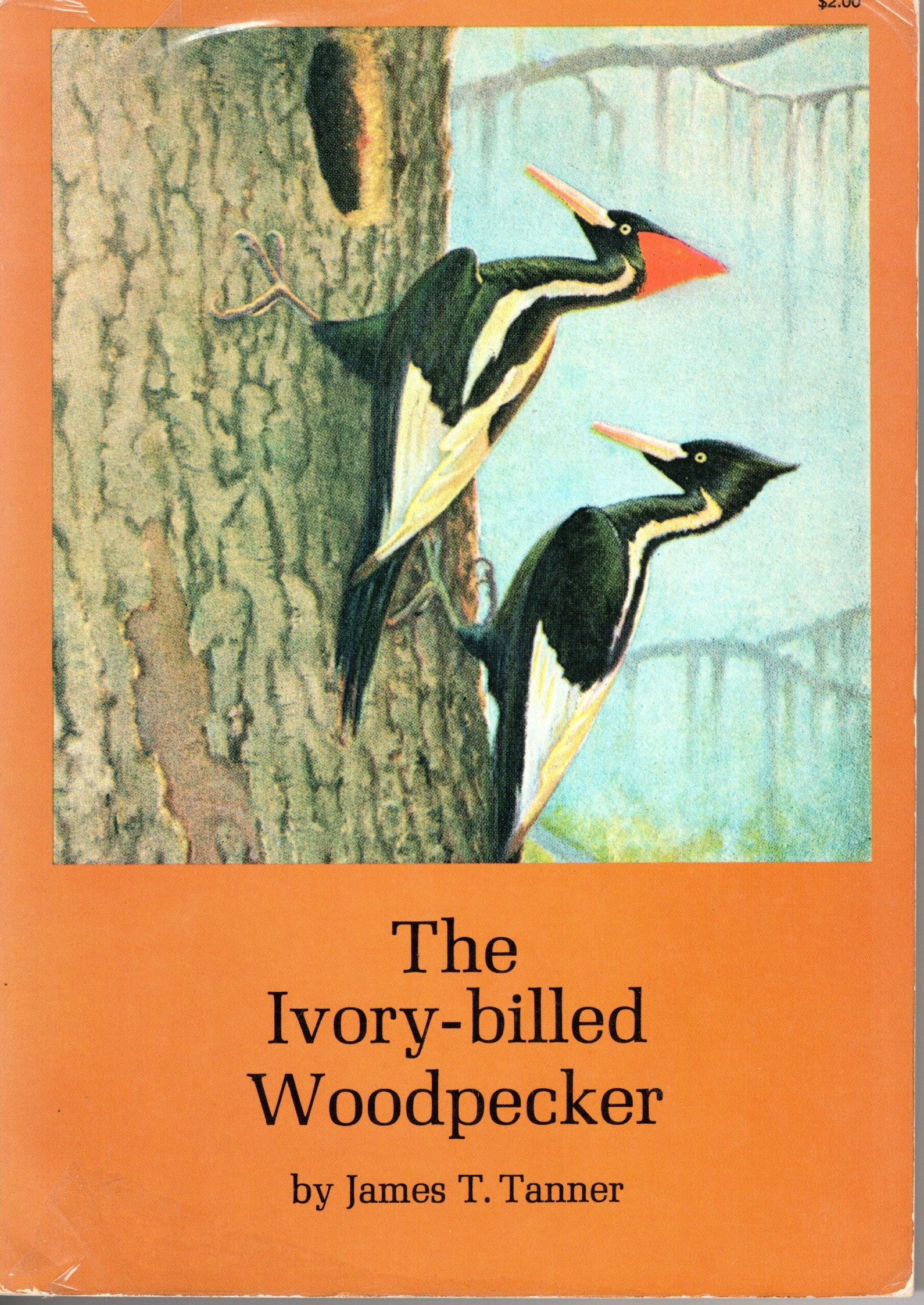
Tanner was the only ornithologist who ever banded an Ivory-billed Woodpecker. The species’ definitive monograph, Tanner’s doctoral thesis, was published by National Audubon in 1942.
Spoiler alert: I didn’t see, hear, or get any photos, videos, or recordings of anything that could possibly have been an Ivory-billed Woodpecker.