


(Listen to the radio version of Part 1, Taxonomy, here, and Part 2, Other Listing Issues, here when I record it tomorrow.)

Taxonomic changes that affect our life lists have been on my radar since I took my first ornithology class three months after I started birding in 1975. The professor explained that some of the birds in our field guides had been “lumped”: the books showed Myrtle and Audubon’s Warblers and Baltimore and Bullock’s Orioles as different species, but my professor said the two pairs had been “lumped” as the “Yellow-rumped Warbler” and “Northern Oriole.”
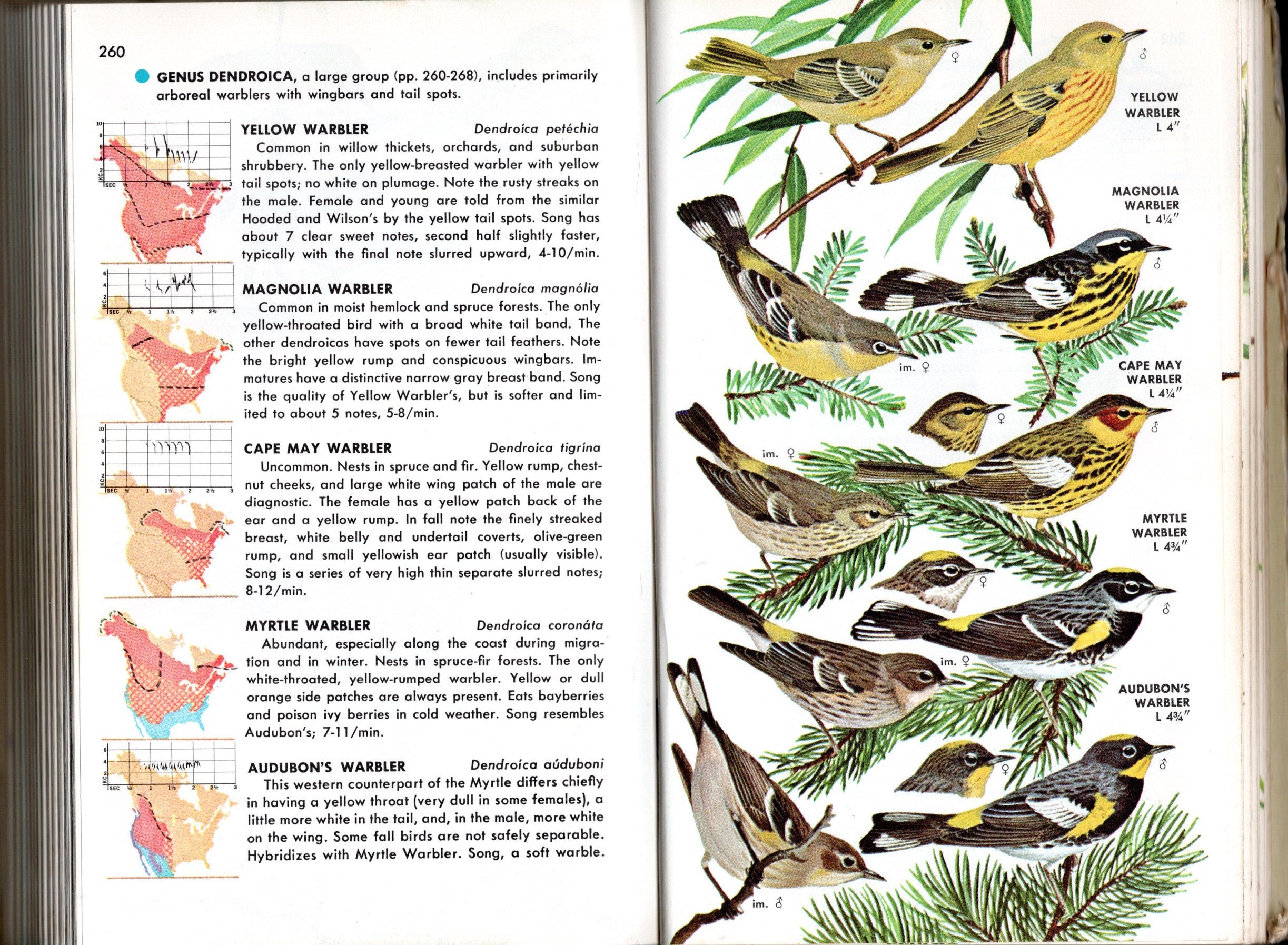
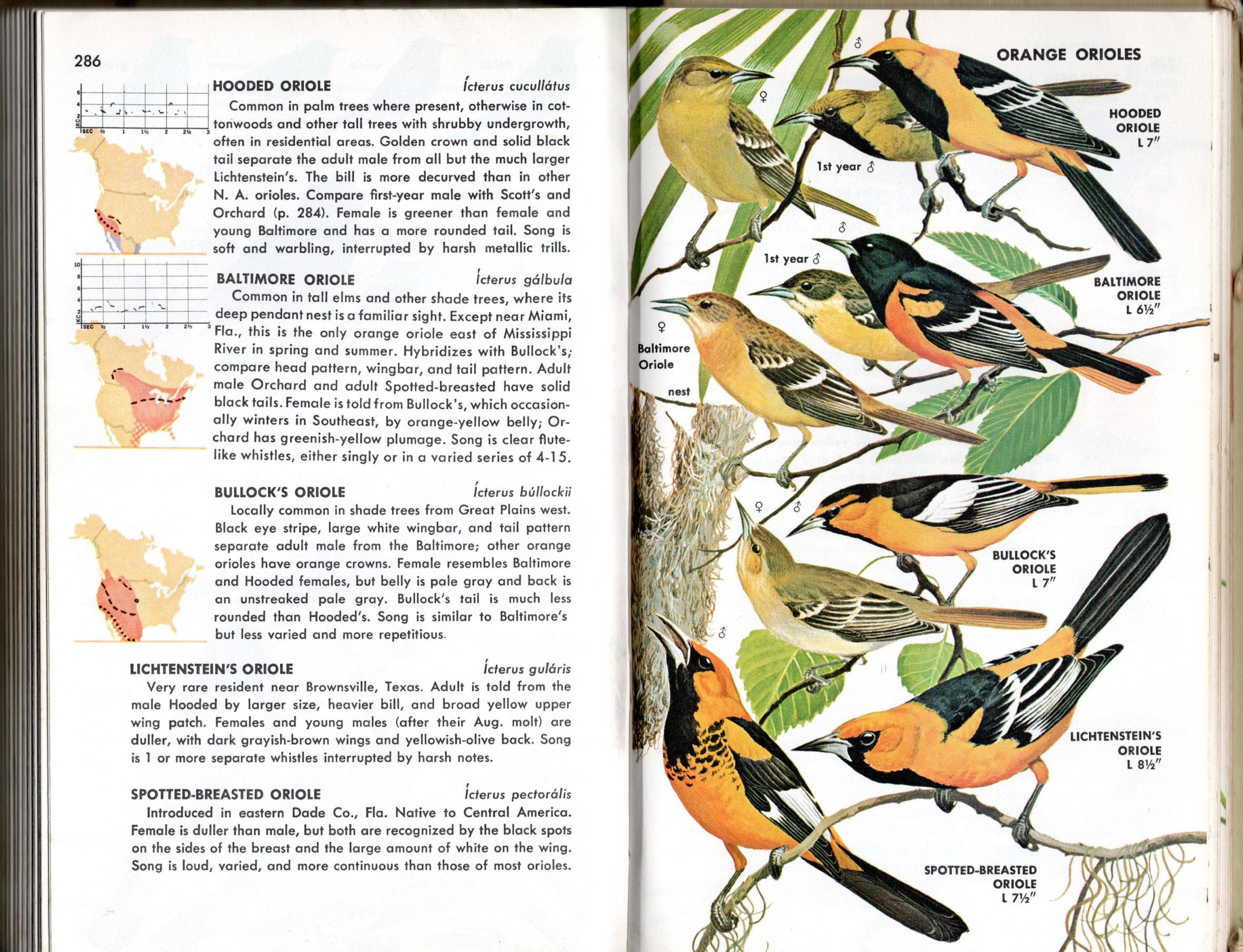
Taxonomists are constantly making changes like this, splitting and lumping species, and the best information at one time gets superseded by newer information.
James Rising was the scientist who conducted the extensive research in the hybrid zone of Baltimore and Bullock’s Orioles in the central United States and, based on how much they hybridized, recommended in 1973 that the two species be lumped. At the time, it made perfect sense that the American Ornithologists’ Union would adopt his recommendation. But then, in 1995, again after painstaking research of birds in that hybrid zone, and with added information from DNA studies and other field research, the American Ornithologists’ Union reversed themselves and split the species back into the original two. This time James Rising was on that committee, voting with the majority to reverse his original conclusions.1 So one morning, without going anywhere, I read on the BirdChat listserv that my life list had grown overnight thanks to that split. I had to track down in my field notebooks when and where I’d seen Bullock’s Orioles in the West because I’d always listed them on my official lists simply as “Northern Oriole.”

Beyond taxonomy, other issues are also involved with life list totals. To count a bird, it must be genuinely wild. Chickens run free on every Hawaiian island, on Key West in Florida, and in many tropical countries, but for the most part, these perfectly wild bird are considered feral—they or their recent ancestors were almost certainly non-countable escapees from captivity. But some of the wild chickens on Kauaʻi are genetically traceable to those brought over by the Polynesians, with few genetic links to the chickens brought to Hawaiʻi by Europeans and Americans, so wild chickens on Kauaʻi with black rather than yellow legs are countable. In the same way, some of the chickens on Key West in Florida can be genetically traced to birds brought by the Spanish Conquistadors, so now are considered genuinely established and countable, too.

Every California Condor was taken into captivity in 1987—the entire population was suffering from lead poisoning. After treating them and successfully breeding them in captivity, conservationists started reintroducing them to the wild in January 1992. At first, these birds required supplemental feeding and heavy monitoring, and the American Birding Association determined that they weren’t “countable” because they weren’t truly wild. This held true even as more and more of the birds were breeding in the wild and using less and less of the supplemental food.
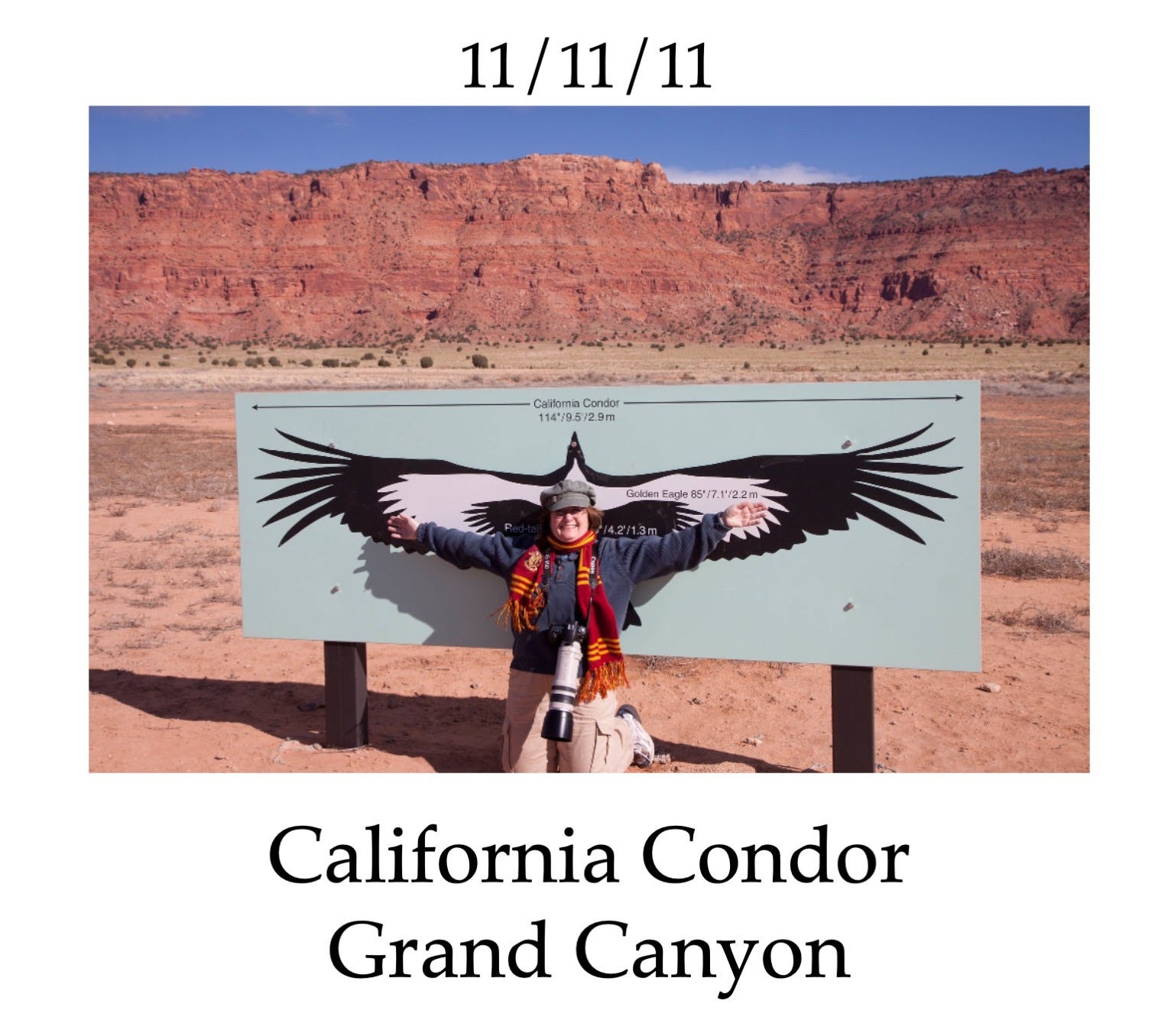
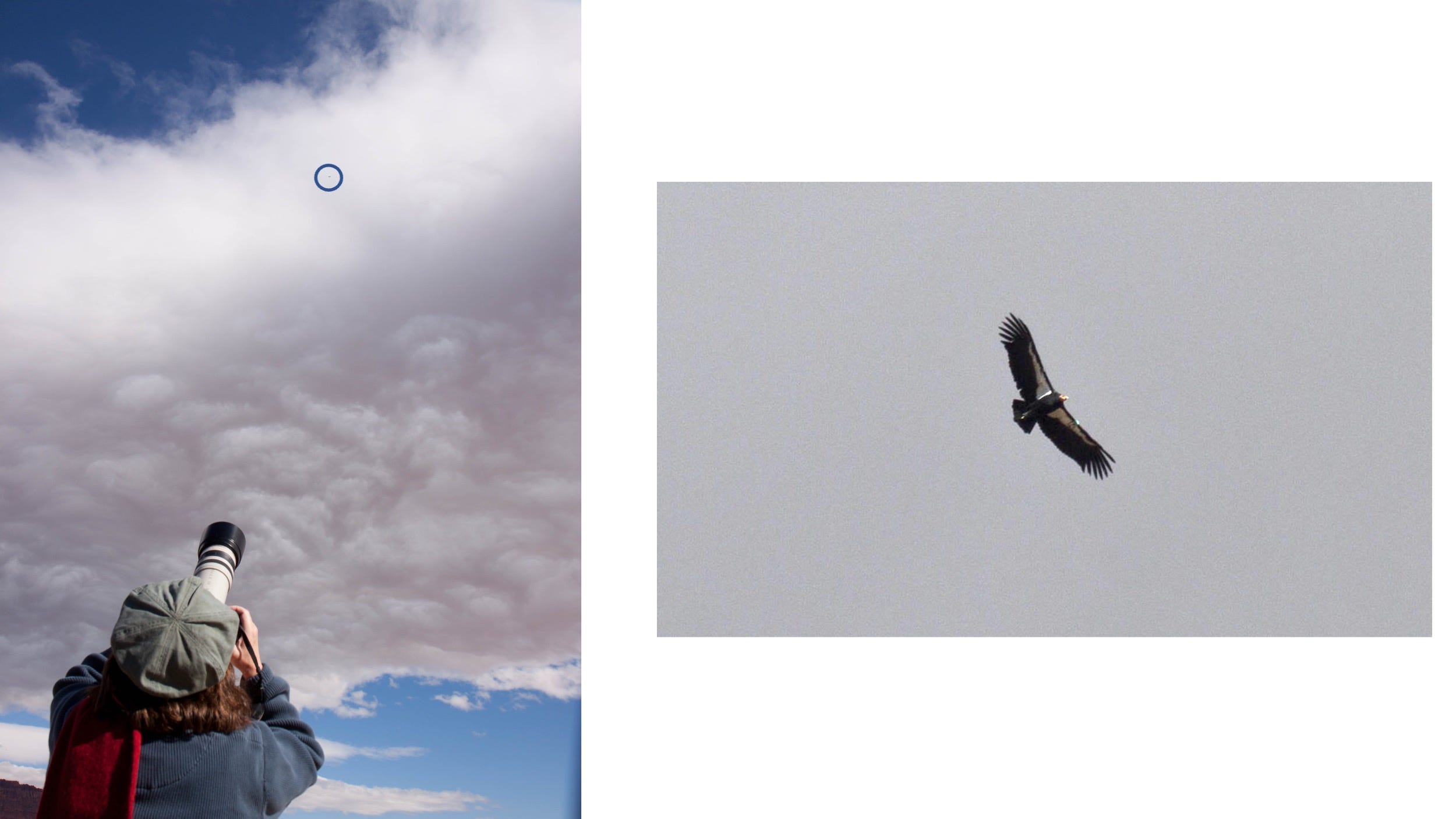
I saw my first condors near the Grand Canyon on 11/11/11, my 60th birthday. They might not have been countable yet by ABA rules, but they certainly were countable on my personal life list. When I first saw them in California during my Conservation Big Year in 2013, the ABA still wasn’t allowing us to count them, nor the reintroduced Aplomado Falcons in Texas, though they, too, were successfully breeding on their own.
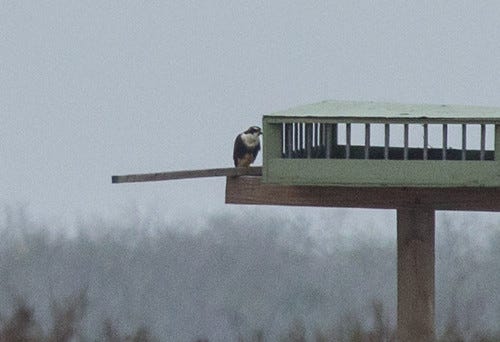
Both species became countable the very next year. I’d entered my encounters with both species on eBird, and as soon as they became countable, voilà! I woke up one day to two new species on my life list. But the rules of Big Years require us to abide by the official ABA list for that year, because the Big Year numbers on the ABA site are like sports stats. Even as species were lumped and split and named countable after 2013, and even as my eBird list for the year has gone up and down, my official ABA Big Year total has stayed the exact same.

I saw one bird I saw that year who wasn’t countable when I saw it—the Rufous-necked Wood-Rail visiting Bosque del Apache National Wildlife Refuge in New Mexico for a few days that summer. The species had never before been reported in the United States so was not any the official lists for North America. But after the New Mexico records committee approved the record, that individual sighting became retroactively listable, so those of us who saw it got to count it on our official year list.
Keeping track of this was ever so much easier when I had a nice small life list. When I started birding, I kept all my records on paper. Then in the late 90s, I bought Jerry Blinn’s listing software for PCs, AviSys, and slowly entered my old data into it. That was great for a decade, but when I got my job as science editor at the Cornell Lab in 2008, I had to switch to a Mac to work with our designer. Suddenly AviSys didn’t work unless I was using special software to run Windows programs on my computer, and meanwhile, the Cornell Lab came up with eBird, which was superior to every listing program in every way.
The ornithologists developing eBird didn’t just keep up with taxonomic changes—they were genuine authorities, some even serving on the committees making the changes in the first place. At first, eBird used the American Ornithologists’ Union’s checklist for North American species, but that was complicated by differences in classification and nomenclature used on other organizations’ checklists for South America and worldwide—many of our birds were called something different by the authorities in Europe and Asia. For consistency, eBird started using a world checklist originally developed by James Clements. The Clements checklist served as the official eBird checklist until just last year.
Meanwhile, the International Ornithological Committee (IOC), BirdLife International, and the North and South American Classification Committees were independently assessing taxonomic revisions from one to four times a year, making the global avian taxonomic landscape confusing. With an increase in global efforts to organize data on birds, a more collaborative effort was needed, and in 2016, representatives from all these taxonomic organizations developed a working committee to create a whole new system, called AviList. It took a long time, and lots of painstaking work to make it operational last year.
On October 20, AviList published their 2026 checklist. This year’s worldwide update includes 39 species gained because of splits, 7 species lost through lumps, and 2 newly described species, resulting in a new total of 11,201 species worldwide. I added new birds because they split the eastern and western Marsh Wrens—I was personally delighted with that addition because the biggest difference is their songs, and my very first Western Marsh Wren was also the very first bird I recorded when I took Cornell’s Field Recording Class in 2001, in the Sierra Nevadas.

The Great Horned Owl seen in North America stays the same but was split from the Paramo Horned Owl that I was lucky enough to see in Ecuador last December.
I saw my lifer Southern Beardless-Tyrannulet in Trinidad in 2001, but also have seen them in Costa Rica, Peru, and Guyana, though I haven’t managed to get a single photo. Now that single species has been split into six different species, of which I’ve seen four, giving me three new lifers.
There were other changes I knew would affect me when eBird started revising all our records on October 27, so I decided to follow the roller coaster along for the ride. On Monday, October 26, my life list stood at 2463. By midmorning on Tuesday, it had dropped one, but by 6 pm had leaped to 2469, and by 8 pm up to 2471! A few minutes later it dropped to 2470, and before I went to bed, it was at 2469. But on Thursday, it rose back to 2470 and stayed there.

Meanwhile, I discovered that I’d totally spaced on an important split six years ago. In 1983, the American Ornithologists’ Union lumped the Mexican Duck with the Mallard because they sometimes hybridize. That didn’t affect my list because I’d never seen a Mexican Duck. When I did see one on the Rio Grande River in Texas in 1997, it counted as a Mallard, as did the flock I saw and photographed in 2013 at Bosque del Apache. Based on DNA studies, the American Ornithological Society re-split them in 2020. That was the year of the pandemic and the summer my grandson Walter was born, so I was focused elsewhere. I double-checked my records for the two trips, verified that they were Mexican Ducks, and edited my eBird records, bringing my life list to 2,471.
That will probably hold. eBird posted today that their update is almost complete, but some totals might still change in the next couple of weeks. All this listing business is making my head swim, but as I always say, no one should go through life listlessly. 2

In the late 90s and early 00s when I was writing for Journey North, an online resource teaching children about bird migration, we tracked oriole migration, and I fielded so many questions about whether the Baltimore Oriole was the same species as the Bullock’s Oriole or not that I decided to write a page about it. Jim Rising happened to be a friend of mine, and he explained in terms children could understand why scientists were right making both decisions. That article is archived here.
This was the very last line in my very first book, For the Birds: An Uncommon Guide, published in 1994.